

The construction materials and minerals industry operates in a dynamic environment where increasing throughput, stringent regulatory requirements, and growing sustainability expectations converge. Material streams are changing, compositions are becoming more heterogeneous, and demands for process stability continue to rise. At the same time, the circular economy has become a central element of industrial strategies, making the quality of solid-liquid separation more important than ever.
In this environment, filtration performance determines not only the economic efficiency of a plant. It also defines its environmental footprint, operational safety, and long-term viability.
For operators of cement plants, construction recycling facilities, landfills, and sand and gravel plants, the filter press has therefore become a key component that shapes the entire value chain and requires engineering far beyond purely mechanical functionality.
Key process requirements
Complex Material Streams Require Sophisticated Solutions
The demands placed on mineral material streams have changed significantly. Materials vary in particle size and water-binding capacity, contain different proportions of fine particles, and fluctuate continuously during operation. Many applications require high throughput while maintaining a defined dry substance content (DS) particularly when the filter cake is reused in energy-intensive processes such as cement production.
Additional key requirements include the efficient recovery of process water, reliable operation even at low ambient temperatures, plant availability exceeding 97%, and a design that remains stable even under highly abrasive conditions. Filtration has therefore evolved far beyond a simple separation step it has become a critical interface between raw materials, process control, and downstream processing.

Technical precision meets engineering excellence
Engineering with Depth
MSE follows a development philosophy based on precise analysis, meticulous engineering, and long-term system design. Every installation begins with a comprehensive understanding of the process media, the operating environment, and the specific production requirements.
This includes detailed engineering analysis of:
- Material characteristics, including fine particle content and water-binding behavior
- Pump selection and feeding characteristics
- Integrated process water management
- Operating temperature ranges, outdoor installation, and winter operation capability
- Building layout and structural constraints
- Automation and safety requirements
Based on this analysis, MSE designs a high-performance filter press engineered to meet both current and future production requirements with an expected service life of at least 20 to 30 years.
The engineering depth of MSE filter presses is reflected in every detail: from filter plate geometries and filter clothmaterials to the selection of construction materials and protective coatings, the design of sludge inlets and filtrate outlets, as well as dedicated cake post-treatment processes. Especially in mineral applications, this level of precision determines cycle times, dry substance content (DS), wear behavior, and overall process stability.

Long-term stability
Mechanical Performance for Demanding Mineral Media
Mineral material streams place exceptional mechanical demands on filtration systems, particularly in applications involving large plate formats, high operating pressures, and high throughput.
Today, filter presses with plate sizes ranging from 1000 to 2500 mm represent the industrial standard. To increase throughput and optimize cycle times, operators are increasingly selecting larger plate formats.
In high-performance applications such as cement plants, feeding pressures exceeding 25 bar are often essential to achieve the required solids concentration. This requires frame constructions capable of withstanding these forces over decades of operation. Equally important is the design of membrane filter plates and chamber filter plates, which must perform reliably, uniformly, and reproducibly under these demanding conditions.
Typical cycle times range between 20 and 40 minutes, including cake discharge. Optimized geometries, advanced sensor technology, and intelligent automation significantly improve cycle stability.

Efficiency and reliability
Automation as the Foundation of Predictable Processes
In modern process environments, automation is no longer an optional feature it is fundamental to plant availability and operational reliability.
Systems such as the automatic filter cake detaching device, intelligent high-pressure filter cloth cleaning, and MSE2FAST discharge technology contribute significantly to operational efficiency. They reduce downtime, minimize wear, and shorten cycle times.
A particularly powerful element is MSE’s proprietary AI:PureLogic control platform. The system continuously records and evaluates process parameters such as conductivity, temperature, moisture content, and vibration patterns in real time. Based on this information, AI:PureLogic automatically performs process adjustments that would otherwise require manual intervention. The result is more stable operation, greater process consistency, and predictable maintenance planning.
Additional safety functions including leakage prevention and detection, membrane rupture detection, and temperature monitoring complete the integrated control concept.
Filter presses for mineral material streams
Applications and Target Industries
These solutions are specifically designed for operators processing mineral material streams who depend on reliable dewatering for stable and efficient production.
01
Cement plants benefit from filter cake with defined dry substance content (DS), high homogeneity, and robust, pressure-resistant mechanical systems that reliably support rotary kiln performance.
02
Construction recycling facilities require systems capable of processing fine particles and cohesive materials while efficiently recovering water and delivering reproducible performance over extended operating periods.
03
Sand and gravel plants require high dewatering capacity combined with minimal wear, while landfill operators depend on the reliable immobilization of contaminants.
04
Excavation and demolition companies require dependable dewatering of heterogeneous material streams while maintaining control over disposal costs.
More than theory
Modern Filtration – A Practical Example
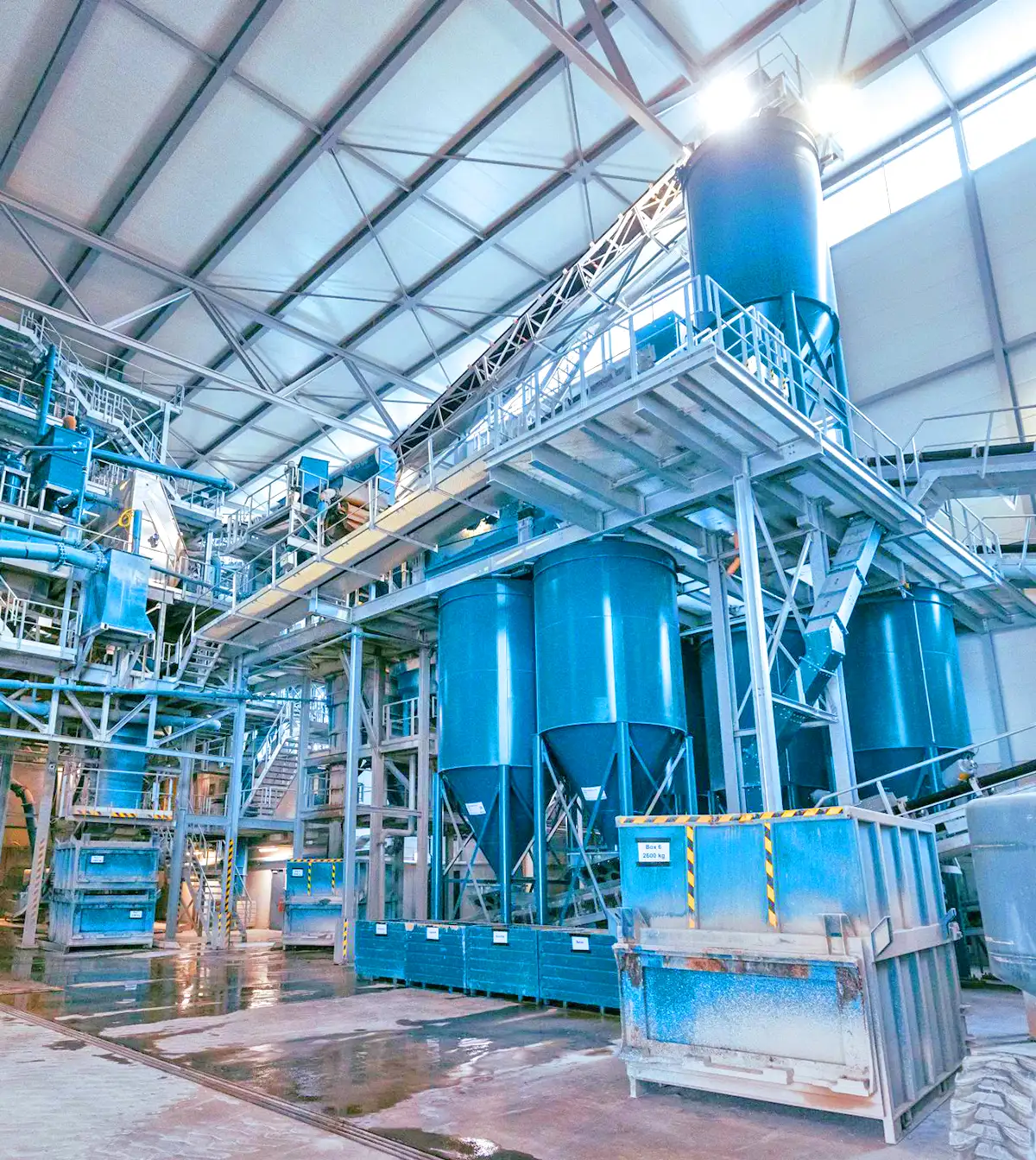
The Recycling Center Eastern Switzerland (RCO) demonstrates how precisely engineered filtration successfully addresses complex process challenges. The facility processes approximately 200,000 tonnes of mineral excavation and demolition material every year a scale that places exceptionally high demands on throughput, process stability, and economic efficiency.
For this project, MSE supplied a large-scale membrane filter press featuring 2 × 2 m filter plates, 130 membrane plates, and approximately 850 m² of filter area. The system includes integrated MSE2FAST discharge technology, automatic filter cloth cleaning, and an automatic swivel drip tray. The proprietary i-Plate sensor continuously measures moisture levels in real time, while the entire system is fully integrated into the complete wet-mechanical processing plant.
The resulting filter cake consistently achieves a dry substance content (DS) exceeding 75%. A significant proportion is reused as an alternative raw material in cement production, where contaminants are neutralized during the kiln process using MSE’s specialized wash pressing technology, resulting in a lower contamination classification. Additional material is utilized in landfill construction.
The filtrate meets the requirements for repeated reuse within the process and contributes significantly to reducing overall water consumption.
Today, RCO represents an outstanding example of filtration technology combining technical excellence, economic performance, and environmental responsibility demonstrating how precise mechanical filtration serves as a key element within the mineral circular economy.
Mechanical Filtration as a Foundation of a Sustainable Circular Economy
Modern filter presses deliver far more than simple dewatering. They directly influence the efficiency of material recovery, process water management, downstream energy consumption, and ultimately the environmental performance of the entire plant.
In mineral applications, they enable significant reductions in water consumption, improve energy efficiency during downstream processing, reduce dependence on primary raw materials, establish stable and predictable disposal processes, and ensure the reliable immobilization of contaminants.
Mechanical filtration has therefore become a key enabling technology for sustainable industrial production.
MSE Compared – Decisive Advantages for Plant Operators
MSE stands for engineering excellence based on precision, robustness, and durability supported by a philosophy focused on long-term operational reliability.
For operators, this means reproducible results despite changing material streams, high plant availability with predictable maintenance, and intelligent automation concepts that permanently reduce operating costs while stabilizing production processes. At the same time, the systems can be seamlessly integrated into existing plants and process environments.
This is complemented by the confidence of working with a partner who not only supplies the technology but also supports operators throughout the entire lifecycle of the installation.
Contact
Your Next Step
Whether optimizing existing filtration systems or developing entirely new process concepts, the MSE engineering team supports every stage from analysis and engineering to implementation.
Request your free process analysis today

The MSE Techletter
Find out all about the latest technologies, developments and valuable know-how about filtration technology – with our Techletter!
Inquiry Form
Your Process Requirements at a Glance
The more we know about your process medium and the relevant process parameters, the more accurately we can assess your filtration application. Simply provide the available information and supporting documents. We will review your requirements and get back to you to discuss the next steps and the appropriate technical solution.