

In wastewater and environmental engineering, the quality of dewatering has a direct impact on both process stability and the economic performance of a plant. Rising disposal costs, stricter regulatory limits, and increasingly heterogeneous sludge characteristics require operators to design their dewatering systems with greater precision than ever before.
Every additional amount of water remaining in the sludge increases transportation and disposal costs. At the same time, process fluctuations can make it more difficult to comply with discharge limits or require additional downstream treatment steps. Within this environment, the filter press plays a key role by structuring the dewatering process and helping to maintain stable and predictable operations.
Media-oriented system design
Dewatering as an Integral Part of the Overall Process
A filter press does far more than simply separate solids from liquids in wastewater applications. It influences sludge handling, filtrate quality, and the efficiency of downstream process steps.
To perform these functions reliably, the system must simultaneously address several key requirements:
01
varying properties of organic and mineral sludge
02
stable performance despite fluctuating feed characteristics
03
integration into existing plant layouts and limited installation space
04
energy-efficient, low-maintenance operation over many years
Robust mechanical design, precise filtration technology, and sophisticated automation provide the foundation for long-term stable and economical operation.
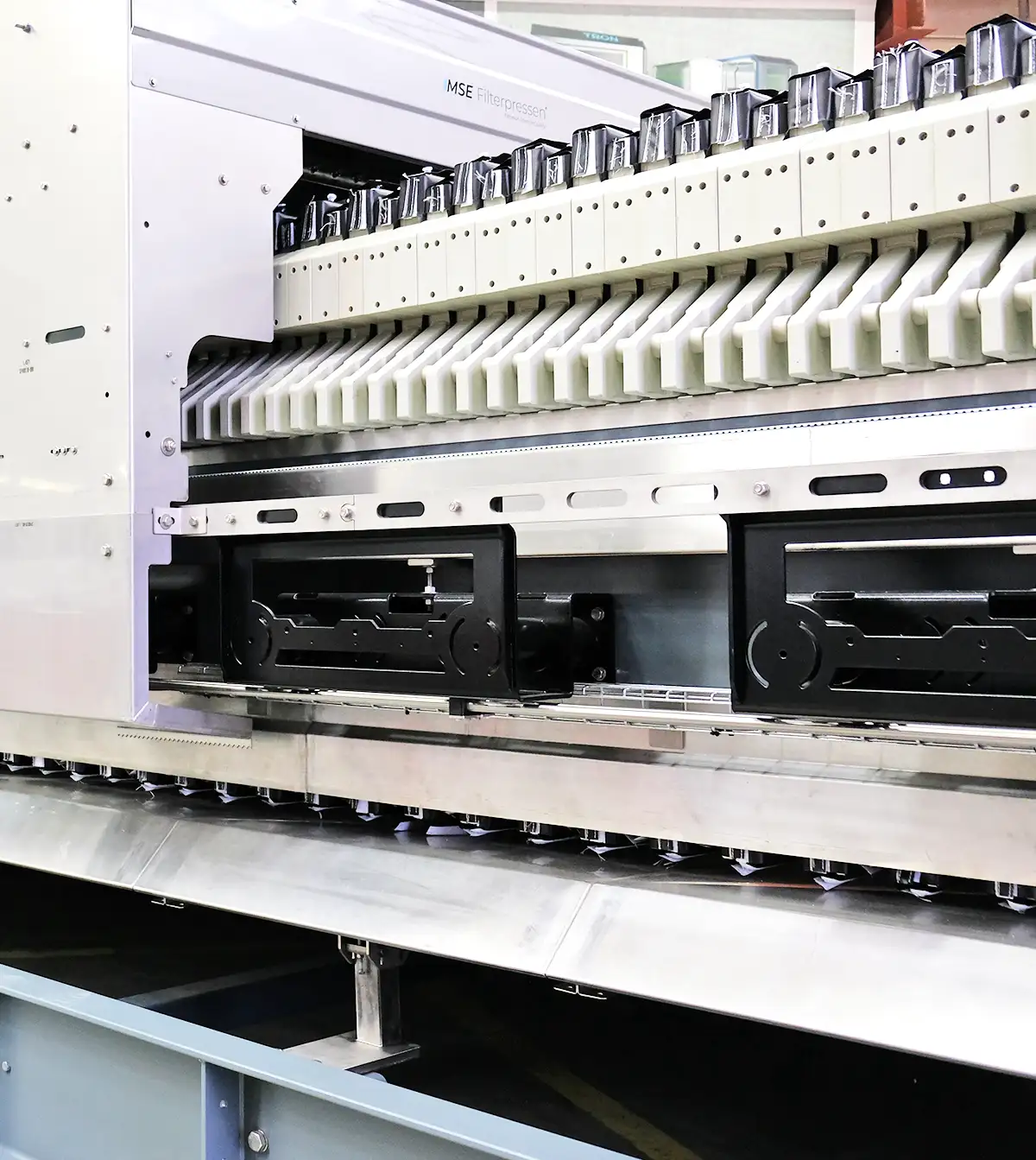
From plate geometry to hydraulics
Structured Processes for Predictable Dewatering
Many operators face similar challenges. Sludge characteristics are becoming more complex, available space is decreasing, while requirements for documentation, operational safety, and plant availability continue to increase.
A properly engineered filter press transforms these challenges into a controlled and reproducible process.
Typical benefits include:
- higher dry substance content (DS), reducing transportation and disposal costs
- clear filtrate supporting reliable compliance with discharge regulations
- homogeneous filter cake for clean handling and predictable logistics
These results are achieved through the precise interaction of every component. Plate geometry, membrane technology, filter cloths, hydraulics, feeding, and automation work together as an integrated system, making the dewatering process reproducible.

Demanding media
Engineered for Diverse Sludge Types and Real Operating Conditions
Environmental applications involve an exceptionally wide range of media. Municipal sewage sludge, industrial process wastewater, landfill leachate, residues from food processing, and media from metal finishing and surface treatment differ significantly in composition, chemical reactivity, and odor generation.
Accordingly, the technical requirements are equally demanding.
MSE develops filter presses specifically for these real operating conditions, including:
- corrosion-resistant, long-lasting materials
- enclosure concepts to minimize odors, dripping water, and aerosols
- automatic and chemical filter cloth cleaning
- control systems that compensate for process fluctuations
- coordinated peripheral equipment across the complete sludge handling process
The result is a filtration solution that consistently delivers stable performance even under demanding operating conditions.

Real-time process intelligence
AI:PureLogic – Data-Driven Process Control
The AI:PureLogic control platform integrates the filter press into the overall plant as a data-driven process component.
The platform continuously records relevant process parameters, including filling behavior, sludge consistency, filter clothcondition, and process deviations.
Based on this information, pressure stages, squeezing times, filter cloth cleaning, and filter cake discharge are automatically adjusted to maintain stable filtration cycles even under changing operating conditions.
Key benefits include:
- reduced energy and chemical consumption
- minimized downtime
- shorter cycle times
- reduced operator workload
- transparent and traceable process data
This transforms filtration into a controllable and fully documented part of the overall process.
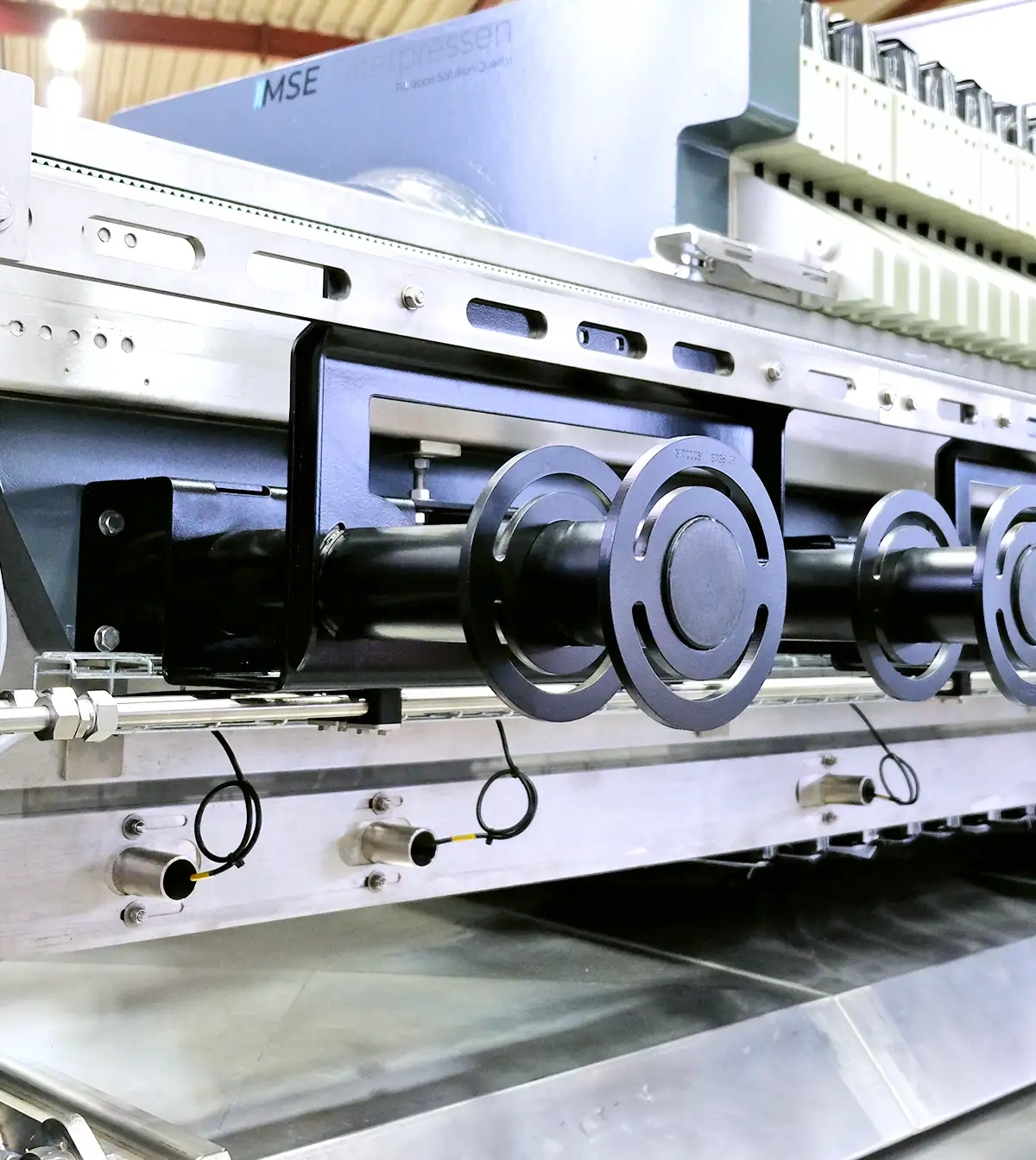
Coordinated dewatering paths
From Individual Equipment to an Integrated Dewatering Concept
Today, operators increasingly look for more than a single machine they seek a partner who understands the complete dewatering process.
MSE therefore supports projects from the initial media analysis through long-term plant operation.
Typical project stages include:
- sludge analysis
- laboratory and pilot-scale filtration testing
- design of filter area, plate technology, filter cloths, and automation
- integration into existing plants or new facilities
- commissioning, operator training, and long-term support
The result is a fully integrated dewatering concept that extends well beyond the delivery of a single machine.

Expertise and results
Decades of Experience for Reliable Solutions
MSE dewatering solutions are engineered for reliable long-term operation.
They are built upon:
- more than 45 years of experience in solid-liquid separation
- in-depth expertise in municipal and industrial sludge
- robust plant concepts with long service life
- intelligent automation
- proven enclosure solutions
- comprehensive service throughout the entire system lifecycle
Contact
Your Next Step
If you are looking to make your dewatering processes more economical, stable, and efficient, a comprehensive process analysis provides a reliable basis for decision-making.
Based on this analysis, suitable dewatering concepts can be technically and economically evaluated and precisely tailored to your individual requirements.
Request Your Free Process Analysis Today

The MSE Techletter
Find out all about the latest technologies, developments and valuable know-how about filtration technology – with our Techletter!
Inquiry Form
Your Process Requirements at a Glance
The more we know about your process medium and the relevant process parameters, the more accurately we can assess your filtration application. Simply provide the available information and supporting documents. We will review your requirements and get back to you to discuss the next steps and the appropriate technical solution.