
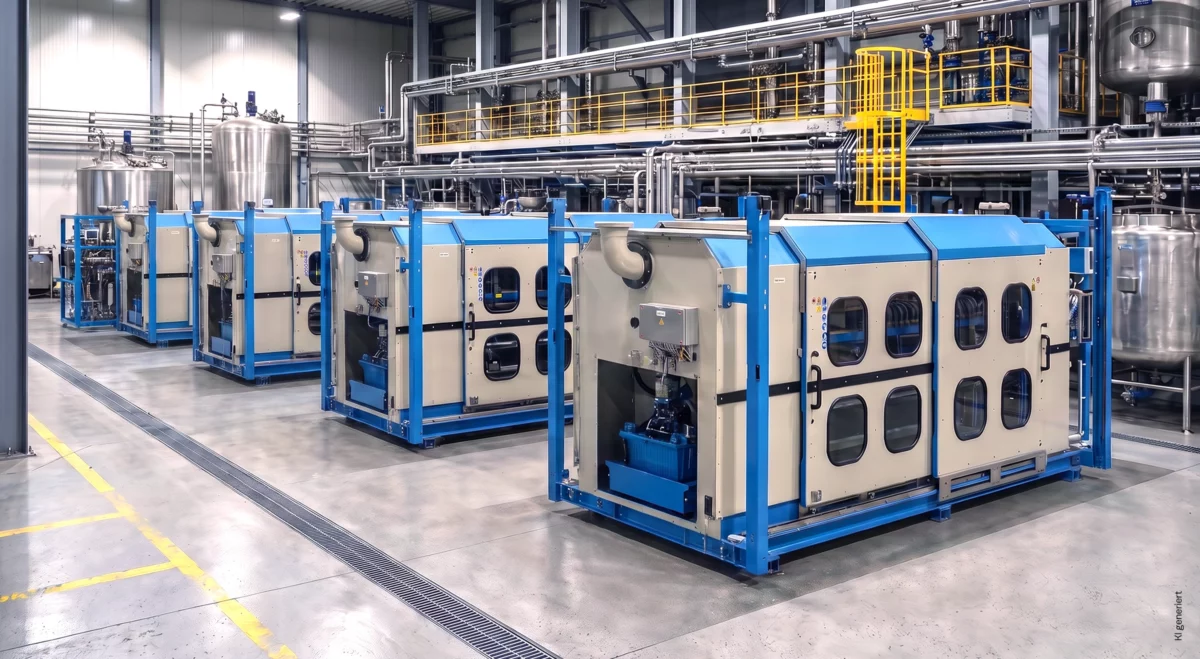
Hydrometallurgy has become a key process in the modern non-ferrous metals industry. Declining ore grades, increasing volumes of metal-bearing residues and recycled materials, as well as growing environmental requirements, are fundamentally changing the industry landscape.
Under these conditions, the ability to process complex metal concentrates and secondary raw materials safely, reliably, and economically determines the performance of entire process chains. This requires technologies that deliver reproducible results even with varying feed materials while meeting today’s demanding standards for safety, environmental performance, and operational efficiency.
Whether processing copper, silver, or gold, the objectives remain the same: maximizing the recovery of valuable metals, ensuring stable process performance, and keeping losses under control. Filtration is therefore not merely a downstream auxiliary operation but a core element of process engineering.
MSE filter presses combine robust mechanical engineering with reliable automation and an engineering approach driven by process requirements and material characteristics not by the machine alone. The objective is filtration that not only separates metal-bearing media but actively controls and stabilizes the process. Reliable operation, long-term stability, and economic efficiency are the defining characteristics of every MSE system.
Precise solutions for demanding requirements
Complex Material Streams Meet High Expectations
Material streams in hydrometallurgy are becoming increasingly diverse and demanding. Typical media such as copper carbonate, gold-bearing intermediate products, silver-containing separation residues, or process sludge from leaching operations combine fine particles, different bonding mechanisms, and often critical impurities.
At the same time, regulatory requirements continue to increase. Residues must be safely immobilized, filtrate quality must be clearly defined, and every process must be fully documented.
Operators therefore face several key challenges:
01
Increasing complexity of metal concentrates
02
More stringent environmental and safety regulations
03
Volatile raw material and metal prices
04
High expectations regarding resource efficiency and OPEX
In such a demanding environment, simple solid-liquid separation is no longer sufficient. A filter press contributes significantly to securing recovery rates, ensuring process stability, and maintaining predictable operating costs over decades.
Process reality
What Filtration Must Deliver in Hydrometallurgy
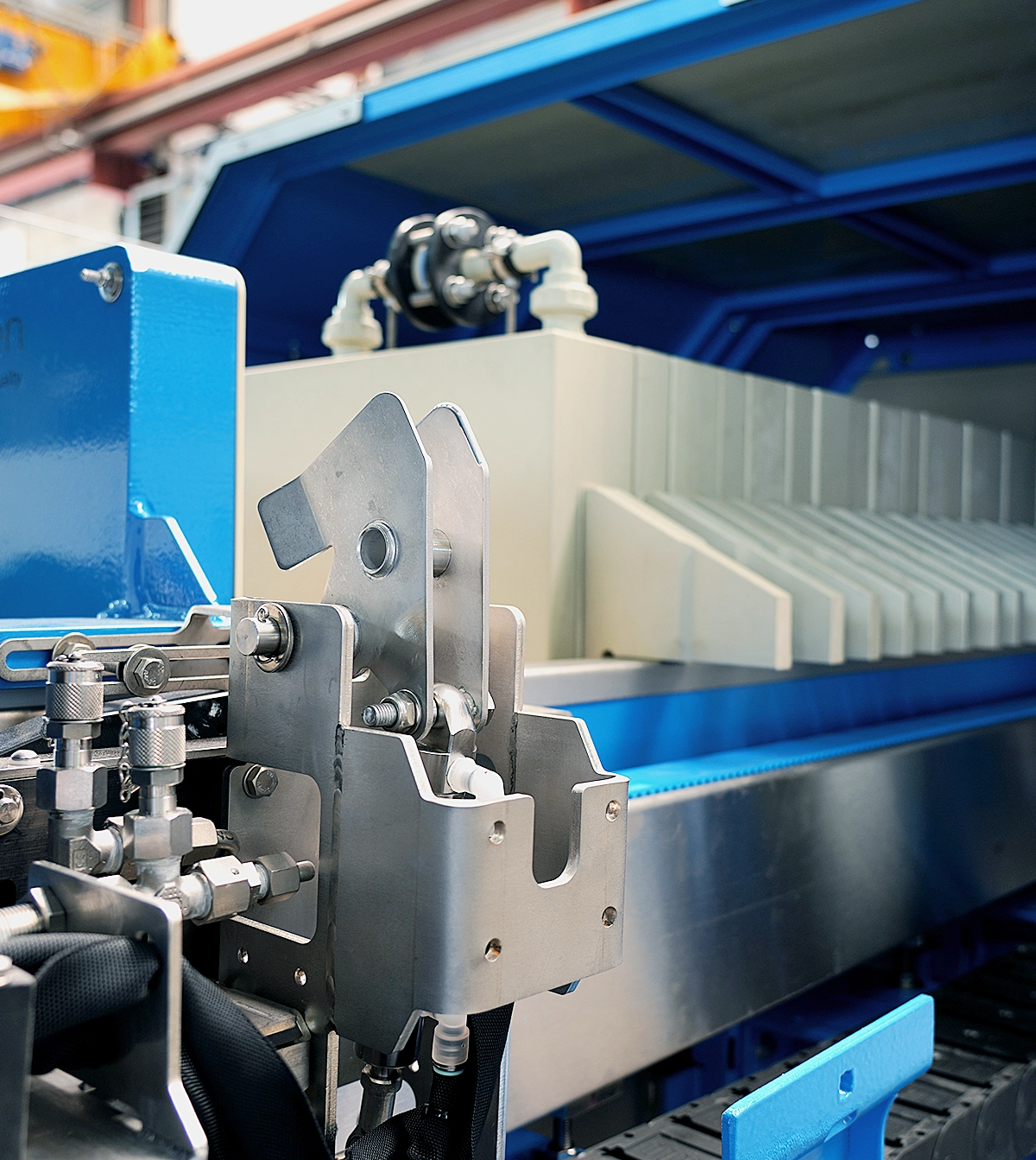
In hydrometallurgical systems, filtration determines process quality on several levels. It influences how clean process solutions are for downstream treatment and how well-defined and usable the filter cake becomes as an intermediate product, a carrier of valuable metals, or a residue.
Ultimately, filtration also determines metal recovery rates as well as the efficiency of water and energy utilization.
Aggressive media, fine cohesive particles, fluctuating compositions, and high operating pressures define the process environment. Consequently, a filter press designed for long-term operation must go beyond standard equipment and be engineered specifically around the hydrometallurgical process.
Systematic process analysis
The MSE Approach: From Process to Machine
The decisive difference is established long before the machine is built.
Hydrometallurgical projects at MSE do not begin with a standard machine but with fundamental process questions:
- How is the suspension composed, and in which batch configuration will filtration take place?
- Which characteristics should the filter cake exhibit in terms of structure, chemistry, purity, and residual moisture?
- What quality requirements apply to the filtrate?
- How is filtration integrated into the overall process?
Based on these answers, MSE performs a comprehensive process analysis covering material streams, process steps, target values, integration into existing plant layouts and buildings, safety requirements, and the desired level of automation.
Only once these conditions have been clearly defined does the engineering phase begin.
The resulting filter press is therefore not a standard off-the-shelf solution but the mechanical implementation of a carefully engineered process concept designed for stable operation and service lives of 20 to 30 years.
Targeted cake post-treatment
Superior Filter Cake Quality as the Key Result
In hydrometallurgy, the quality of the filter cake is not merely a by-product it is a decisive success factor.
It determines:
- whether downstream process steps operate reliably
- how efficiently washing and purification stages perform
- how securely critical components remain immobilized
- whether requirements for reuse or final disposal are fulfilled
For this reason, MSE focuses specifically on optimizing filter cake formation. Through precise control of pressure profiles, filling behavior, and cake post-treatment, filter cake properties can be tailored to the operator’s requirements including purity, residual moisture, and the removal of specific impurities.
Cake post-treatment processes, such as intensified washing sequences or specially adapted process steps, are not regarded as optional features but as integral components of hydrometallurgical process engineering.
Engineering in every detail
Every Component as Part of the Overall Process
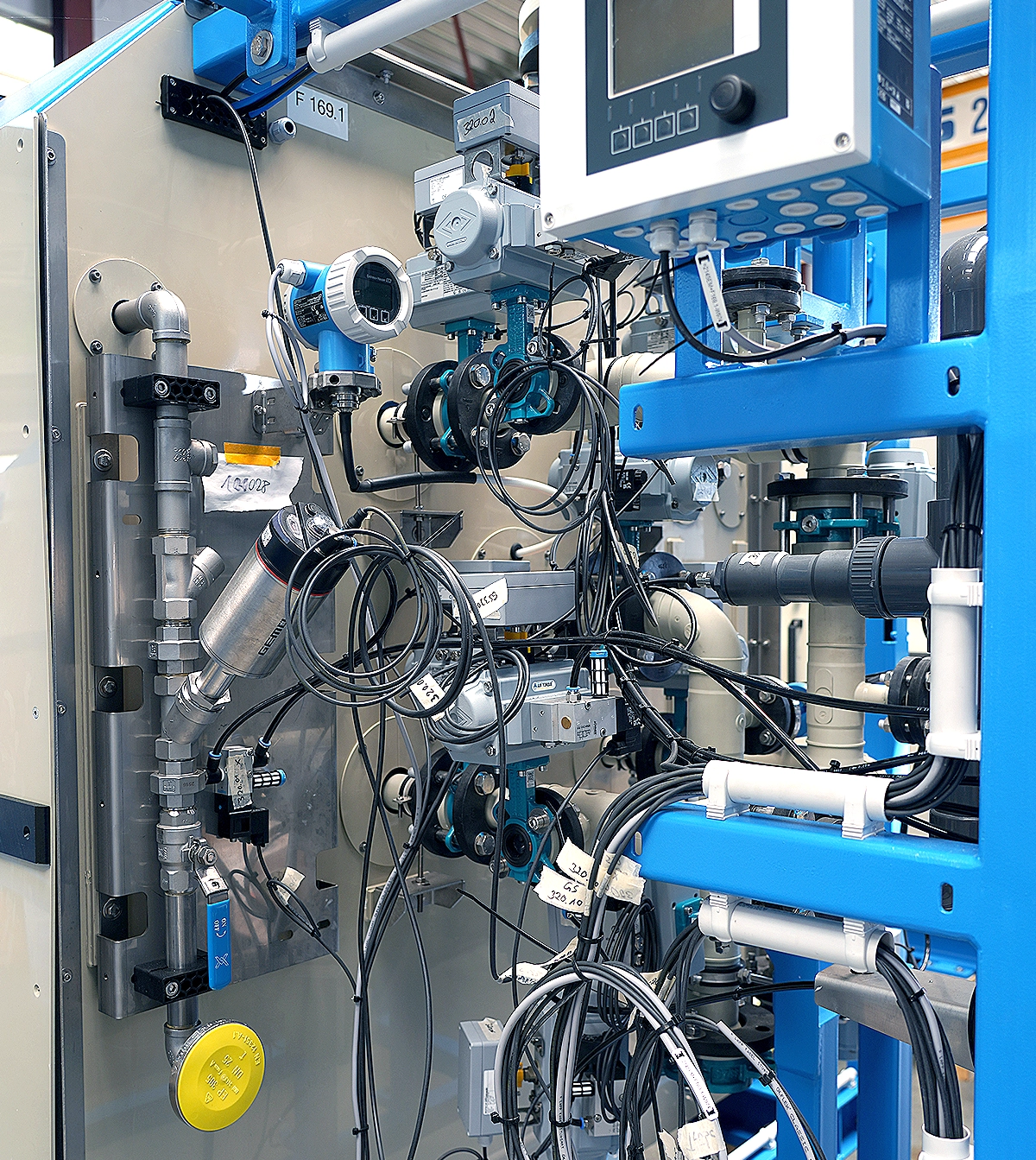
MSE engineering extends far beyond the mechanical frame of the press.
Typical engineering considerations include:
- Optimizing the number, position, and dimensions of the sludge inlet and filtrate outlet to achieve ideal flow behavior, filling characteristics, and discharge.
- Designing filter plates and filter cloths according to abrasion resistance, chemical exposure, and required separation performance.
- Selecting structural materials and protective coatings based on the chemical properties of the medium and the required service life.
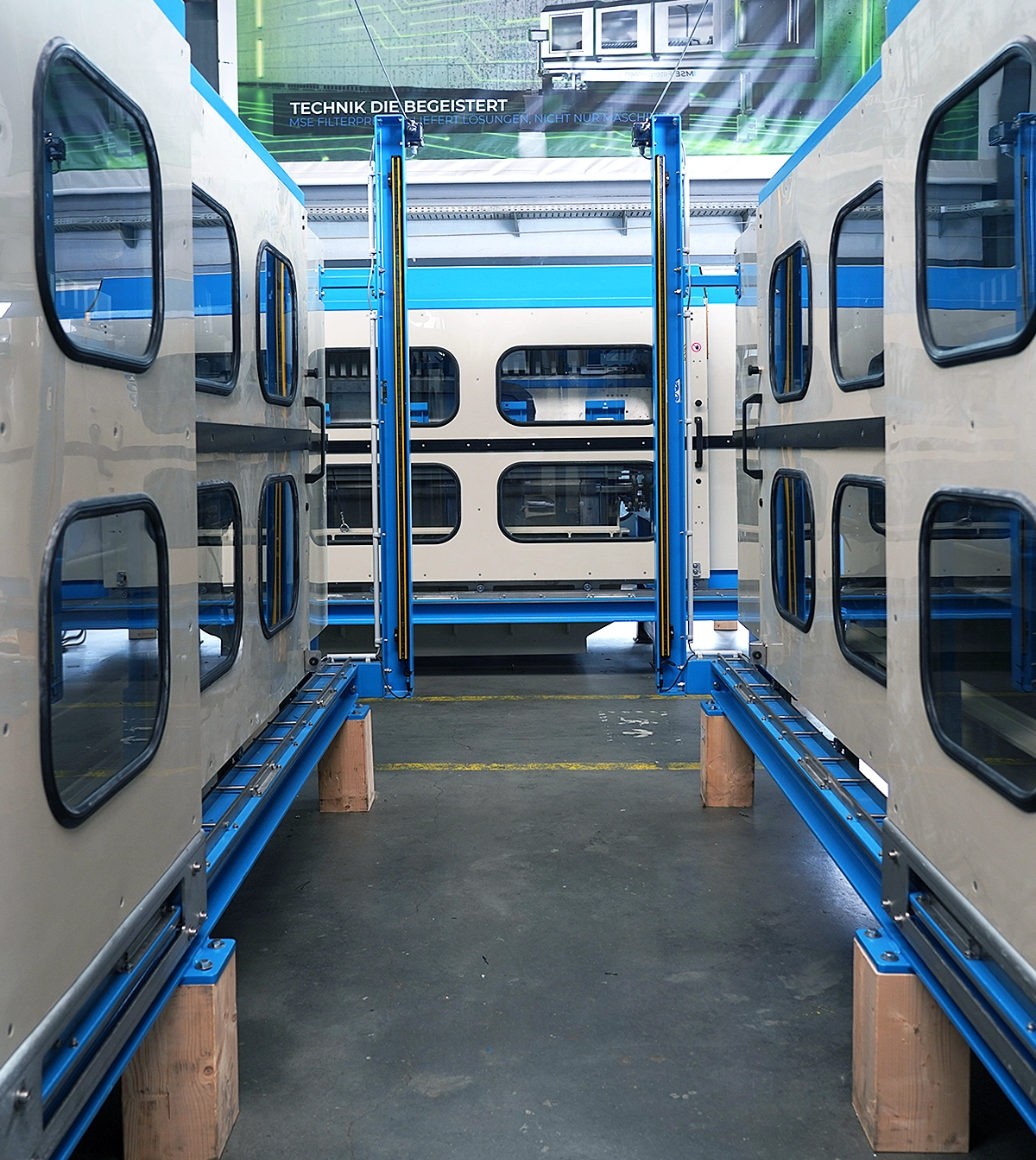
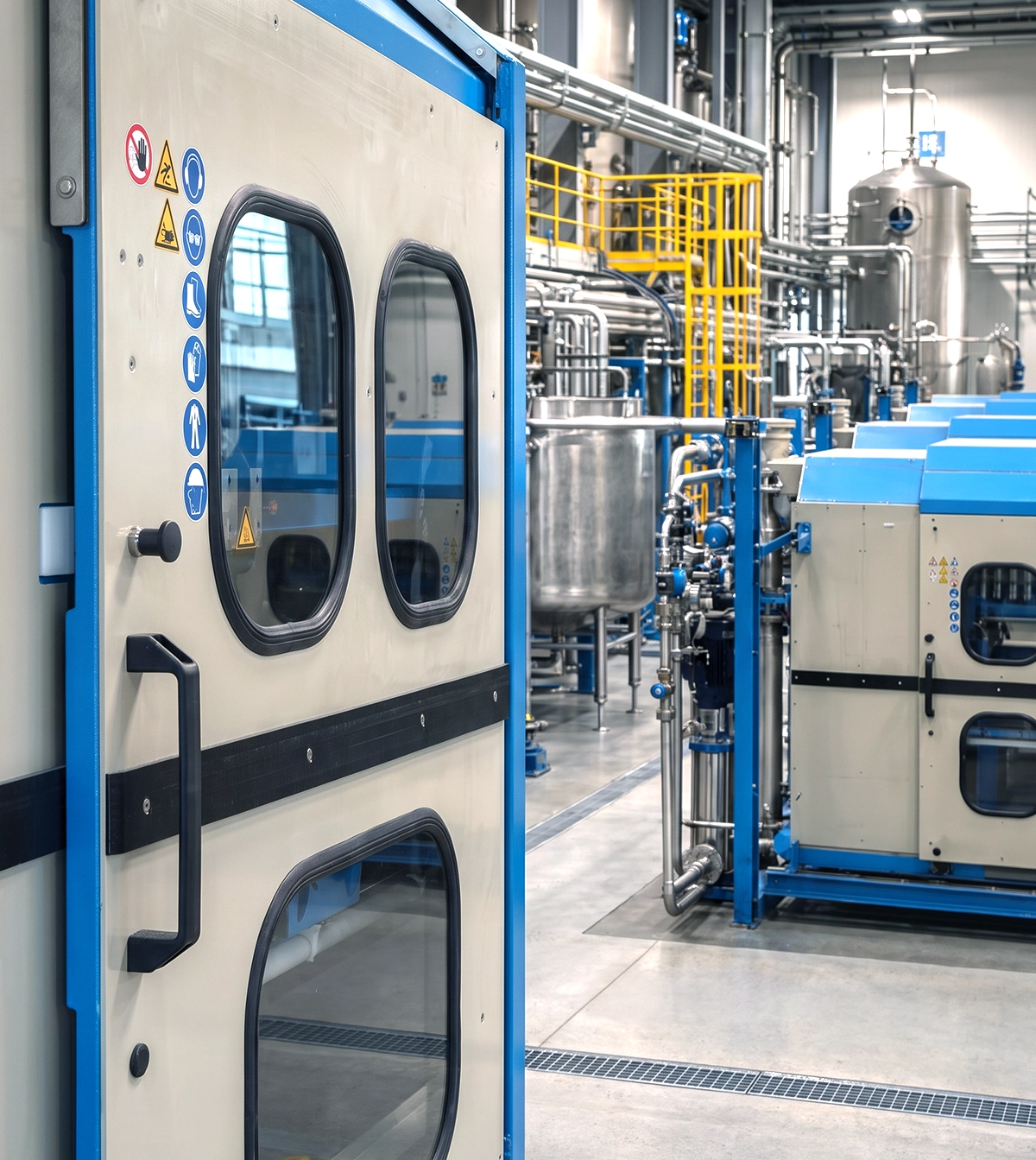
- Integrating safety requirements including specialized enclosure systems for hydrometallurgical applications from the earliest design stage.
- Engineering the feeding pump as an integral part of the complete filtration system.
Existing solutions are continuously enhanced through newly developed components and application-specific adaptations. Customer-specific requirements are implemented efficiently without negatively affecting CAPEX, OPEX, or delivery times.

Control technologies
Automation, Safety, and Process Stability
Hydrometallurgical plants operate in environments where safety and process stability are essential.
For this reason, MSE combines robust mechanical engineering with advanced control and automation technologies.
Automated cake discharge, filter cloth cleaning systems, integrated condition monitoring, and where required the proprietary AI:PureLogic platform support highly reproducible long-term operation.
Process data is continuously collected and analyzed to stabilize plant performance and optimize every stage of filtration.
For applications with particularly demanding safety requirements, specially engineered enclosure and protection concepts are implemented. Every solution is tailored to the specific application rather than based on a predefined standard.
Applications
Where MSE Technologies Are Used
MSE filtration solutions are used wherever hydrometallurgical processes require reliable solid-liquid separation:
01
Metal Smelters and Processing Plants
Requiring stable filter cake, defined filtrate quality, and reliable filtration of complex concentrates.
02
Metal Recycling Facilities
Recovering valuable metals from heterogeneous, fine-particle, or chemically demanding material streams.
03
Hydrometallurgical Processing Plants
Providing stable separation following leaching, precipitation, or extraction processes.
04
Environmentally Focused Processing Facilities
Supporting circular processes in which resources are reused and contaminants are safely immobilized.
05
Engineering Companies and EPC Contractors
Developing modular, durable, low-maintenance systems designed for reliable operation over decades.
All these applications share one requirement: precise mechanical filtration that ensures stable and economical operation.
Mechanical filtration as a core process element
Hydrometallurgy offers numerous advantages over conventional smelting processes, including greater flexibility for complex materials, lower energy consumption, improved environmental performance, and efficient utilization of low-grade ores and secondary raw materials.
To fully realize these benefits, stable and reproducible solid-liquid separation is essential.
Filtration determines separation efficiency, process stability, recovery rates, and resource utilization, making it a fundamental component of modern metal production.
Why mse is the right partner
MSE combines decades of experience in industrial solid-liquid separation with comprehensive expertise in hydrometallurgical processes.
Projects are supported from initial analysis and process engineering through complete integration into existing production facilities.
Every installation is based on precise engineering and a thorough understanding of real operating conditions, resulting in filtration systems that combine technical reliability, economic efficiency, and long-term operational safety.
Your strategic advantages with mse
- Precise and reproducible recovery of valuable metals
- Stable operation despite varying material streams
- Robust, pressure-resistant designs for demanding media
- Efficient use of water and process chemicals
- Reliable separation of critical constituents
- Modular, scalable systems designed for long-term operation
Filtration as a Key Process Element
A Building Block for Stable Recovery Processes
Whether processing complex metal concentrates or recovering valuable metals from secondary raw materials, stable solid-liquid separation is essential for process quality, recovery rates, and resource efficiency.
MSE technology provides a precisely engineered process step that supports hydrometallurgical processes reliably, reproducibly, and economically.
Further technical insights into hydrometallurgical processes and industrial filtration can be found in MSE’s technical articles:
Contact
Your Next Step
Wherever metal-bearing material streams must be processed with precision, valuable metals recovered efficiently, and long-term process stability ensured, MSE supports operators as an experienced engineering partner.
Request Your Free Process Analysis Today

The MSE Techletter
Find out all about the latest technologies, developments and valuable know-how about filtration technology – with our Techletter!
Inquiry Form
Your Process Requirements at a Glance
The more we know about your process medium and the relevant process parameters, the more accurately we can assess your filtration application. Simply provide the available information and supporting documents. We will review your requirements and get back to you to discuss the next steps and the appropriate technical solution.